
How Do You Support Your Line Managers After the Kick-off?
In this chapter:
- Whose Responsibility is it to Drive Change into an Organisation?
- What Happens After the Managers’ Kick-off?
- What is the Number One Mistake Some Companies Make After the Managers’ Kick off?
- Which is More Important – Managers’ Kick off or the Staff’s Kick off?
- Joining the Support Program After the Managers’ Kick off – is it Mandatory or Voluntary?
- What is the Best Way to Support the Managers After the Kick off: Mass Communication Ways, Small Group Discussions or One-to-one Consultations?
- Which Communication Channels are More Effective with the Managers: Face-to-Face, Video or Electronic?
- What are the Four Different Types of Support Activities You Can Offer Your Managers After the Kick off?
- What are the Risks When Supporting Your Managers After the Kick off?
- Takeaways
Whose Responsibility is it to Drive Change into an Organisation?

Being open to change and supporting it positively to contribute towards an agile organisation is all staff’s responsibility.
The change project team’s responsibility is to enable the managers, create an environment of change and to support the ensuing change process. But they are not in charge of driving the change. They are the facilitators and supporters.
The management board, the heads of departments and the managers are the ultimate ones who are responsible to drive deep change because they are in positions of seniority, power and influence. The opinion leaders and influencers of the company can also be roped in to influence the change process because when they talk, people listen.
Unfortunately the conclusion as to who is in the leading role and who is in the supporting role is often confused in some organisations and this creates much turmoil and stress for everyone involved, especially when the going gets tough in a change project.
However, this confusion can be avoided if you follow proper project management best practices, the roles and responsibilities can be discussed, aligned and written down right at the begining of the project.
I just wanted to bring this point up now before continuing with this chapter. The reason being that there could be cases where the board, heads of departments, the managers, the staff and – the project team themselves – think that the project team is responsibile to drive change.
It isn’t. The project team creates tools and supports the change process, managers drive the change project. Just to be clear we start.
What Happens After the Managers’ Kick-off?

In order to know what kind of support managers’ need after the kick-off, it is first of all good to know what actually happens after the kick-off.
Normally the managers should be given some time to digest the information that they received at the kick-off, to seek clarifications and to make their own roll-out plan for their team members. This roll-out plan should then coincide with the company’s staff roll-out plan from the project team.
As such the managers will need support to prepare their own team’s roll-out and in linking that with the company’s staff roll-out plan. And they would need support during the actual roll-out as well.
In summary, these are the steps:
- Company organises a kick off for the managers to prepare them to roll out change into their teams
- Company organises a mass launch for the staff with an internal communication campaign creating a conducive environment for change
- Managers leverage that landscape to communicate and drive deep change into their teams.
The project team basically organises all of these and supports the entire change program.
What is the Number One Mistake Some Companies Make After a Managers’ Kick off?

Some companies organise excellent kick off events for their managers and then they unfortunately stop there. They fail to understand that a kick off for their managers does not equal to having change being successfully implemented in the company. And therefore they lose the opportunity to leverage the momentum coming out of the managers’ kick off to drive deep change into the organisation.
And also because of this failure to continue to engage and enable managers to act after the kick off, many managers think that attending a kick off is compulsory and what happens after a kick off is optional. This “misunderstanding” unfortunately destroys your entire change management effort immediately right there and then.
Managers normally will make it a top priority to attend the managers’ kick off because their immeidate bosses are attending and also because the company’s management board will be present.
However if no expectations or targets or datelines were communicated at the kick-off or at least after it by the company or the project team, managers would not normally look into the change topic simply because of the busyness of their daily business. Or they might plan to return to it at a “later time” but sometimes that “later time” never comes. Or they might attempt to drive change into their teams but stop when faced with constraints or hurdles.
All in all, you can expect that the percentage of managers who actually manage to drive change successfully into their teams after a kick off to be quite small.
Note: Read here to find how and why managers are important for the change process: Line Managers 6.1 – What is the Role of Line Managers and Why Are They Important in Times of Change in Asia Pacific?
Which is More Important – Managers’ Kick off or the Staff’s Kick off?
Some companies due to various reasons believe that the managers’ kick off is the company’s kick off, meaning that they only have one kick off and that is for the managers and that’s it. However, it is important to note that the managers’ kick off and the staff’s kick off are not the same as they have different objectives and deliverables.
As to answer the question which is more important – the managers’ kick off or the staff’s, I would say its the staff’s because they are the main target audience we are trying to change and impact. However, in order to do that, the managers have to understand what is the change and they need to support it first before they convince their team mates to support it. In that sense the managers’ kick-off is also important because it is an enabler for the staff’s kick off. Therefore the final conclusion is that we need both, both are important and both compliment and support each other.
Joining the Support Program After the Managers’ Kick off – is it Mandatory or Voluntary?

You can prepare a staff roll-out plan which includes a full support program for managers that they can join. And you can make them mandatory or volunteer. Here are some key points about them:
Mandatory. Managers must attend the kick-off, use the managers’ tool kit and particpate in the post kick-off support program to roll-out the change into their teams. This simply means they try to leverage all the resources and support that the company is throwing in their way. This is a little bit like a mandatory participation because they try to use as much as possible of the company’s reourcess.
Volunteer. The other way is that the managers can “opt-out” if they want to. But they will still be held accountable to complete a successful roll-out into their team. Example. Managers are given a roll-out tool kit at the kick-off. The tool kit contains various ideas and tools for them to organise various change communication activities within their team by which they can successfully communicate and implement the intended change. However, they can decide if they want to use the toolkit or put it aside and use their own ideas and activities to communicate and implement the change.
My recommendation. In my experience if you do not make it mandatory, not many managers will use your support program. However, if you make it mandatory then managers will feel “forced” and this will impact their motivation. The best solution would be to make a wider, larger program mandatory and some detailed options inside flexible and optional.
What is the Best Way to Support the Managers After the Kick off : Mass Communication Ways, Small Group Discussions or One-to-one Consultations?
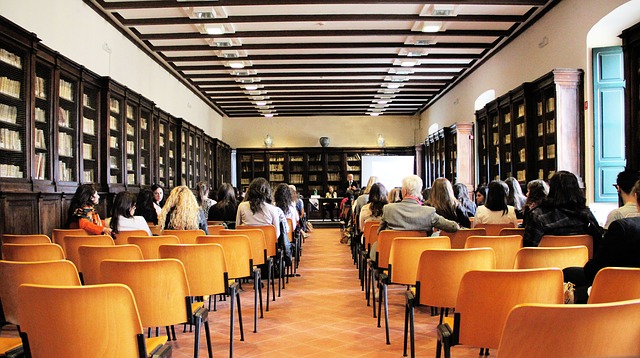
Let’s assume that you plan to offer some tips and support to the managers after the kick-off event. And your idea is to get one of the board members to deliver a talk to share some best practices etc. The topic could be as simple as “How to recognize and reward your team members?” or “How to design your change program using the tool kit?” etc.
Mass communication. You can offer this support as a talk in a your company hall or auditoriam. Mass invitations are sent out to all managers and whoever is available and is interested attends the talk. Maybe you might offer it twice or thrice to suit managers’ availability in different sites and locations. I would call this a form of support a mass communication exercise.
Small group discussion. You can also give this talk to the managers but not in one large and single way but in small groups of 8-10. For example, you could invite the board member responsible for finance to address the finance managers, invite the board member for HR to address the HR managers etc. These “generals” know and understand their “troops” much better than anyone else and this will be able to bring the topic to them in highly “localised”* ways.
You can also “segmentate” your managers in other ways. For example, you can organise seperate briefings for groups of managers divided into different “demographic” profiles such as number of years in the company, permanent staff vs temporary/intern staff, team assistants vs staff, singles vs couples vs families etc. It all depends on the change topic, the company’s culture, its internal communication policies, available resources and your project timelines.
Warning. Please be careful and follow your company’s privacy as well as diversity and inclusion rules and guidelines. Avoid segmentating your managers in any ways that violates your company’s policies.
* Note. To further understand what is “localization”, please read Localisation 7.1 – Why Do You Need to Localise the Way You Communicate Change in Asia Pacific?
One-to-one discussion. You do not send a mass invitation inviting all the managers for a talk. Well you could, but in this mass email you offer information to managers to book a one-to-one session with an ambassador (one of your project team members or your influencers). And in this 45-60 minutes session, the influencer listens to the manager, his issues and his requests and then the influencer offers him suitable tips and recommendations.
Offering a one-to-one discussion is a highly customized solution and is therefore very effective but is also a heavy committment for the project team if you happen to have a large group of managers, say 100 and above. It is not impossible, just more challenging because it is resource intensive.
One way around this is to identify and train a group of influencers as your change ambassadors and then empowering them. Else the project team alone would not be able to deliver this one-to-one support. I will write more about influencers and ambassadors in the future chapters.
My recommendation. I would recommend a combination of all three types of activities. As little mass communication activities as possible, more of small group activities and use one-to-one consultancies for special cases and for deeper support. If you ask for estimated resource allocations, I would recommend the following estimations:
- 20% of mass communications activities – letter from President to all managers, mass emails to all managers, public talks for all managers etc. I keep this mass communication component small, because after many years, I have learned that when you speak to everyone, you actually speak to no one.
- 50% of small group activities – Questions and answer sessions, How-to sessions, focus group sessions etc in small groups of 8-9, according to functions and not cross functional. When managers who have similar roles in the same fucntions are in the same room, they are able to relate the chaneg topic directly to their work and their team’s work more easily. A connection is made and that connection “sticks” which is great for the change effort.
- 30% of one-to-one activities – managers book one-to-one sessions with project team members or ambassadors to discuss unique challenges or to ask questions that they might feel uncomfortable asking in public or in groups.
The program can be more successful if you segmentate the target audience according to their functions. This helps the program to be delievered in more customised ways which increases the chances of the manager using it and benefiting from it. For example, more finance managers will attend a talk if they know that their board member for finance is delivering it compared to, for example, the board member for technology.
Which Communication Channels are More Effective with the Managers: Face-to-Face, Video or Electronic?

Let us continue with the example from above: you want to offer some tips and share best practices with your managers on “How to recognize and reward your team members?” Now, you have three basic choices on what channels you want to use: face-to-face, video or electronically.
Face-to-face. Face-to-face support activities for the managers are most effective. This is because you meet people face-to-face, see them in their eyes and have a close interaction. The flip side is that they are little bit like events (except for the face-to-face discussions) and therefore may need some event management support such as sending out invitations, booking venues, coordinating the slides, facilitating the discussions, managing the fun factors etc.
Video. When face-to-face options are limited, you can use video to support the managers. For example you can organise a video conference to share best practices with manaers in other cities and who could not travel down for a face-to-face session. You can use web-casts or event create a series of FAQ videos to support managers. Videos are the next best option when face-to-face channels are limited. And I am not talking about hiring a video crew for every occassion. You can always set-up an in-house filming crew to record and upload a constant stream of video clips on the unfolding change movement.
Electronic. All other electronic communication channels such as pop-ups, emails, e-newsletters, apps and intranet sites are far less effective when compared with face-to-face or video channels. Perhaps cheaper or faster to organise, but not as effective as face-to-face or video. But it is definitely part of the mix of communication channels.
My recommendation. I would recommend a combination of face-to-face, video and electronic channels in this proportion where you focus on more on face-to-face support, less on video and much less on electronic means.:
- 50% of Face-to-face channels: mass face-to-face communication talks and presentations, small group discussion, one-to-one discussions etc
- 30% of Video channels: corporate videos, how-to videos, user-generated video clips etc
- 20% of Electronic channels: emails, pop-ups, e-newsletter, websites etc
What are the Four Different Types of Support Activities You Can Offer Your Managers After the Kick off?

1. Support on how to use the managers’ toolkit. Let’s say the toolkit offers coaching tips to managers on how they can use a story-telling strategy to explain some aspects of the change to their team mates. After learning about this new communication idea, a manager may have been motivated to develop his own story based on his department’s situation. But he needs a listening ear to test his story and he may also need some feedback. And therefore it is a good idea to give him an email addtess that he can write to, a hotline number he can call, a “change program office” he can visit, a website he can go to etc.
2. Support on how managers can design and implement a change plan for their team. The managers’ toolkit will address how the managers can design and implement their own customized change campiagn for their team based on their department’s needs. However, some managers may get stuck in this area as they are not change or communication professionals. Therefore they will need support in developing a plan that suits their needs and we should give it to them. We should use the opportunity to offer tips, share best practices and help them to make their roll-out plan even greater.
3. Support for managers with unique issues in his department. Even when you are running a well-crafted change management program in your company, there will always be some people issues which cannot be resolved using the standard tools or processes. In such situations you need a tailor-made solution to resolve an issue which is unique to a department. This is best done by a one-to-one consultation and follow-up meetings with the manager to support him with his specific issues. However, you have to keep in mind that you cannot take over the manager’s responsibility for the change. You can coach the manager and give him tips and ideas but he has to continue to be in the driver seat.
4. Support in creating a conducive change environment in the company. You need to deck your office spaces with banners, posters, flaglines etc and bring out the change slogans. You need to offer a website which serves as a one-stop support site for the change in your company. You can organise a calendar of activities for the staff to participate and to learn more about the change. You can launch an internal communication campaign which brings news and updates on how the company is doing with the change. This is a very big and important part of what you can do after the managers’ kick off.
For example, you can develop a guideline, if your management agrees, that all speeeches, events, workshops, meetings, programs, projects etc taking place in the company during the change implementation phase should echo and intepret the key change message. This essentially converts all communication activities in your company into a message multiplier for you, overnight. You can reieterate messages in different ways for different target audiences without spending any additional resources.
And so while the commander of the ship – the manager – battles to drive deep change into his team, you can support him by engulfing his team in a contagious change environment.
What are the Risks When Supporting Your Managers After the Kick off?
Risk #1: Managers do not know what they are supposed to do after the kick off
Possible root causes
- Managers did not attend the managers’ kick off
- Managers attended the managers’ kick off but did not pay attention
- Managers attended the managers’ kick-off, paid attention but still face some challenges e.g. lack of language proficiency, lack of background, unique challenges etc
Preventive actions
- Ensure that the board clearly communicates the heads of departments’ and managers’ roles, responsibilities and deliverables right from the begining
- Make sure all managers attent the managers’ kick-off
- Localise the managers’ kick-off agenda with local references and examples and delivered in local language
- Create opportunities for managers to ask questions and for you to check their understanding during the kick off
- Offer FAQ, Q&A sessions, hotline numbers, helpdesks etc. in the kick off
- Give local contact points for managers to reach out and to clarify doubts
Corrective actions
- You can offer most of the same solutions as above, even though it after the kick-off
- In addition, you can organise small group or one-to-one discusisons to re-explain the managers’ tool kit, the program and to clarify their tasks.
Risk #2. Managers complain that they do not have time to drive change

Possible root causes
Managers complain that they do not have the time to drive the deep change into their teams because they are too busy with the daily business, new projects, additional responsibilities, manpower issues etc.
Preventive actions
People will normally people find the time if they think something is important. However it is not a key responsibility of the project team to motivate the managers. It can be one of the areas that they can help and support in but it is not their main responsibility. This is the responsibility of their immediate line managers’, in many cases, this refers to the heads of departments.
- Ensure that the board clearly communicates the heads of departments’ and managers’ roles, responsibilities and deliverables right from the begining.
- There are some clear targets and timelines communicated at the managers’ kick off for the heads of departments and the managers on the deliverables. There has to be an outcome and output which should be tracked and reported.
Corrective actions.
However the project team can support as follows:
- Offer a one-to-one consultation to the manager to help him identify the root causes
- Give a few recommendations to help him bring this topic to his line manager
- Share with him success stories and best practices from other managers and other departments.
- Provide additional training, consultation, support etc as needed
The best solution for this is for the heads of departments to be held accountable for success of the change roll-out plans. And there should be regular updates between the board, them and their line managers on the status of the change project.
Risk #3: Managers face unique challenges perculiar to their teams

Possible root causes
There will be some managers with issues that are unique to them and that can’t be solved by the project’s standard approach or tools. For example, an expatriate manager could be leaving soon after the managers’ kick-off and the new local manager joining in might not have any clue about the change project. Another example could be that a team is made up of staff coming from the same company group but from different legal entities and therefore with slightly different business goals, strategies, cultural orientations etc. And the manager’s role to transform this diverse team can become complicated.
Preventive actions
You need to address this situation during the planning phase, especially if you anticipate that they are major issues that can occur repeatedly. During the planning and brain storming sessions, list down the top five cases for which a slightly modified approach might be needed and then plan for it. For less frequent and less important and one-off unique scenarios, rely on one-to-one discussions to find solutions.
Corrective actions
Organise one-to-one discussions with the managers with unique issues or assign ambassadors from the same business units as the managers to support them. These managers must be supported to overcome their challenges else it will become “bad publicity” for the change program.
Risk #4: Managers complain that your solutions and tools are not working

Possible root causes
This feedback is very important because it is coming from the ground and usually there is some amount of truth in it and therefore you have to listen to it and fix it. It also shows that the managers care about this topic and this is great for your change cause. Now possible root causes:
- You did not sufficiently localise the change program
- You did not sufficiently brainstorm ideas from the ground
- You did not sufficiently align your roll-out plans with the management circles
- You focused more on the “icings” and not on the “cake” aspects of the program
Preventive actions
- Refer to the tips on locaization here Localisation 7.1 – Why Do You Need to Localise the Way You Communicate Change in Asia Pacific?
- Make sure you built the program plans based on ideas and feedback coming from the ground. No project team, no matter how experienced or talented, has the ability to know all the ground situations. That is why you need to combine the professional knowhow of the project team with the local experience of the ground colleagues. Else you might have a really solid-looking plan that looks good on the PowerPoint slides but fails miserably on the ground.
- Step 1. Go from site-to-site and invite as many diverse colleagues from the ground as possible to brainstorming workshops and listen to their ideas and feedback.
- Step 2. Built a plan based on their ground feedback and get it reviewed again from the ground and polish it further.
- Step 3. Get management feedback on this proposed plan and include their viewpoints and ideas.
- Follow the practical recommendations and tips offered in this book as they are coming from my own experiences on the ground fixing various change and communication issues over many years.
Corrective actions
Organise the same solutions recommended above for preventive actions but with a sense of urgency and speed. Unfortunately there is no work around for this mistake. It is a misake at the core and has to be fixed at the core. But however, you may have the opportunity to brand it as Wave II.
Risk #5: Managers misunderstood that you are in charge of the change, not them.

Possible root causes
It is possible that somewhere down the line, there is a misunderstanding and managers think that they are helping you and that you are in charge of the change. I said “possible” but in real life this happens quite often and is one of the most common causes for conflicts, communication breakdowns and change failures.
This happens when a manager acknowledeges that he does not have the right resources or skills to lead the change process and then decides to “pass the ball” back to you saying “Here you go, fix this. It’s your job!”. I know that not all managers are like that, but some are.
There are three reaons why you or your project team members should not bend to this pressure and take over this responsibility.
- Firstly, it will become a precedent for other managers trying to avoid their change responsibilities
- Secondly, if you start taking over these change responsibilities from your managers, your project team will be stretched soon and this will impact the quality of support you offer to all managers as well as the change project.
- Thirdly, you will be taking away the opportunity for the managers to learn how to lead change, a treasured skill nowadays in managers. The relevant wisdom is “Give a man a fish and you feed him for a day; teach a man to fish and you feed him for a lifetime.” The faster your managers learn to carry out change projects, the better for your company’s agility.
So please “pass the ball back” to your managers!
Preventive solutions
One of the key messages to your managers from your board and the heads of departments should be: “You are in the driver seat”. This message should come from day one and in all change communication activities with the managers e.g. , President’s letter, kick off event, managers’ tool kit etc. It should be communicated again and again clearly and strongly in different ways throughout the change campaign.
Corrective solutions
Explain to the manager that you are able to support him in a central way but are unable to take over the change responsibility for his team’s change because every manager is responsibile for his own team. This is because every team has its own unique blend of personalities, its own history and its own set of challenges that only its own manager knows best. However, you can talk to the ambassadors in the same business unit as the manager to support him more, but the ambassador should not also take over the change responsibility.
Risk #6. Insufficient budget to organise a staff roll-out after the managers’ kick off.
Possible root causes
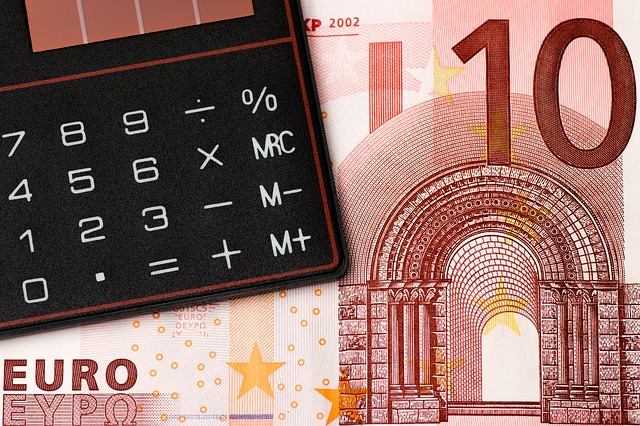
Some companies invest as much as one million Euros to organise a managers’ kick-off event. While this demonstrates a company’s committment to a topic, it does sort of “puts all the eggs into one basket”. Investing one million Euros in a year-long communication campaign is one thing, investing it all on a single event is another thing.
Preventive actions
Assign about 40% of the resources for the managers’ kick-off activities and 60% for the staff’s roll-out activities. For example, instead of spending one million Euros for the managers’ kick-off, split it into Euro 400,000 for managers and Euro 600,000 for the staff. This diversifies the investment on the communication activities.
Corrective actions
The corrective action has to be essentially made by the company’s board to allocate unbudgeted funds for a staff roll-out. The board has to be convinced that funds are needed to drive deep change into the entire organisation. Managers are one part of the equation but the staff are also a very important. If you cannot convince the board to allocate new funds, you will not be able to organise any change activities for the staff, well at least not in that year. The following year might be an option.
Key Takeaways
Whose Responsibility is it to Drive Change into an Organisation?
The management board, the heads of departments and the managers are responsible to drive deep change because they are in positions of seniority, power and influence.
What Happens After the Managers’ Kick-off?
- Company organises a kick off for the managers to prepare them to roll out change into their teams
- Company organises a mass launch for the staff with an internal communication campaign creating a conducive environment for change
- Managers leverage that landscape to communicate and drive deep change into their teams.
What is the Number One Mistake Some Companies Make After a Managers’ Kick off?
Companies organise excellent kick off events for their managers and then they stop there. They fail to understand that a kick off for their managers does not equal to having change being successfully implemented in the company.
Which is More Important – Managers’ Kick off or the Staff’s Kick off?
Staff’s kick off is more important because they are the main target audience we are trying to change and impact but managers’ kick off enables that and therefore both are important.
Joining the Support Program after the Managers’ Kick off – is it Mandatory or Voluntary?
- Mandatory. Managers must attend the kick-off, use the managers’ tool kit and participate in the post kick off support program and use all of these company support and resources to roll out the change into their teams.
- Volunteer. Managers can “opt-out” if they want to from using any of the company’s resources and support but they will still be held accountable for a successful roll-out into their teams.
- My recommendation. The best solution would be to make a wider, larger program mandatory and some detailed options inside flexible and easy.
What is the Best Way to Support the Managers After the Kick off: Mass Communication Ways, Small Group Discussions or One-to-one Consultations?
- Mass communication. Eg. You can offer this support as a talk in a your company hall or auditoriam.
- Small group discussion. Eg. You can also give this talk to the managers but not in one large and single way but in small groups of 8-10.
- One-to-one discussion. Eg. Offer information to managers to book a one-to-one session with an ambassador.
- My recommendation. I would recommend a combination of all three types of activities. 20% of mass communications activities, 50% of small group activities and 30% of one-to-one activities.
Which Communication Channels are More Effective with the Managers: Face-to-Face, Video or Electronic?
- Face-to-face. Face-to-face support activities for the managers are most effective.
- Video. When face-to-face options are limited, you can use video to support the managers.
- Electronic. All other electronic communication channels such as pop-ups, emails, e-newsletters, apps and intranet sites are far less effective when compared with face-to-face or video channels.
- My recommendation. I would recommend a combination of face-to-face, video and electronic channels in this proportion 50% of face-to-face, 30% of video and 20% of electronic channels.
What are the Four Different Types of Support Activities You Can Offer Your Managers?
- Support on how to use the managers’ toolkit.
- Support on how managers can design and implement a change plan for their team.
- Support for managers with unique issues in his department.
- Support in creating a conducive change environment in the company.
What are the Risks When Supporting Your Managers After the Kick off? [Refer to chapter for preventive and corrective actions for each of these risks]
- Managers do not know what they are supposed to do after the kick off
- Managers complain that they do not have time to drive change
- Managers face unique challenges perculiar to their teams
- Managers complain that your solutions and tools are not working
- Managers misunderstand that you are in charge of the change, not them.
- Insufficient budget to organise a staff roll-out after the managers’ kick off.
 For Those In-Charge of Change